

 Inventions and also manufacturing processes are patentable. Therefore, an invention has to meet certain criteria. It must be in a field of technology, and it must be new, inventive and industrially applicable, i.e. designed for use in reality. An invention is considered "new and inventive" if it would not have been obvious to a person skilled in the art.
The protection granted by a patent is territorial. An invention is therefore only protected in the state in which a patent has been granted for the invention. This is also the case for international patents, only the application procedure is simplified for international patent applications. However, whether a patent is granted for the invention in an international patent application is decided in each case by the national or regional patent offices and courts.
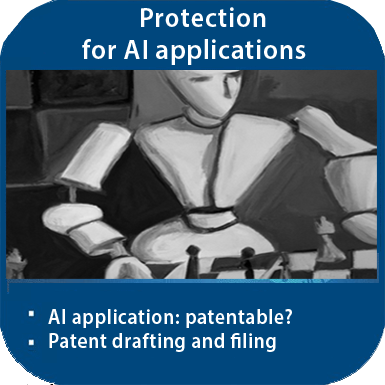
It is therefore a complex area of law before a patent can be granted. A current example from case law can be found, for example, in our blog article BPatG: Patent application on autonomous vehicles with AI.
A patent specification is a carefully drafted document containing various sections, e.g. the claims and the description. The wording of the individual sections of the patent specification must be chosen deliberately. This is because the wording of the patent specification must already take into account that later amendments are possible. It is also advisable to file all required parts of a patent specification when filing an application in order to avoid problems with later amendments (keyword: inadmissible extension of the scope of protection).
Our law firm Köllner & Partner has particular expertise in drafting patent claims, including mechanical, chemical, optical, computer-implemented and software-related inventions and AI applications. This is appreciated by our clients, as is our transparent cost structure. Please read more under references or on our Google account.
We pride ourselves on responding precisely to our clients' needs and developing tailored solutions. We make your invention our business. We can advise and assist you in all areas of patent law and in patenting your invention, including in the areas of
Our selected cooperation partners in almost all countries of the world enable us to comment on all questions and to act with pinpoint accuracy. We would be pleased to support you at any time in the field of patent applications, nationally as well as internationally: Benefit from the excellent professional knowledge and many years of expertise of our entire team.
A patent grants a technical invention a right of protection and an exclusive right, limited in time and territory. The patent holder may prohibit third parties from commercially exploiting the protected invention or permit such exploitation in exchange for the payment of license fees. Patents can therefore help recoup development costs, maintain competitive advantages, and increase a company’s value.
In general, technical products and processes are patentable. In particular, the invention must be new, involve an inventive step, and be industrially applicable. Furthermore, it must be described in the application so clearly and completely that a person skilled in the art can carry it out. Software inventions may also be patentable if they are based on technical considerations. “Technology” is understood here to mean physics, chemistry, engineering, pharmacy, and similar fields that operate according to the laws of nature.
As a general rule, the invention should be kept confidential before filing the patent application. Presentations, scientific publications, trade show appearances, websites, or sales may already constitute prior art and negate the novelty of the invention. Discussions with business partners should therefore be conducted confidentially prior to filing and, if possible, based on a confidentiality agreement. If in doubt, you should file the application first and only then disclose the invention.
A patent application typically includes a technical description, patent claims, drawings (if applicable), and an abstract. Information about the applicant and the inventors is also required. It is particularly important that the invention be fully described as of the filing date. As a general rule, new technical information may not be added to the original application at a later date.
Patent claims define the scope of legal protection for the future patent. They must precisely capture the invention while being formulated broadly enough to prevent competitors from circumventing the protection through minor modifications. Claims that are too narrow may leave economically significant embodiments unprotected; claims that are too broad may fail due to the prior art. Drafting the patent claims is therefore one of the most challenging parts of a patent application.
After filing, the Patent Office first reviews the formal requirements. Upon a request for examination, the examiner identifies the relevant prior art and assesses whether the legal requirements for protection are met. The Patent Office often issues one or more examination reports containing critical comments on the patent application. The applicant may respond to these comments and, if necessary, submit an amended set of claims. A patent application is typically published 18 months after the filing date or the relevant priority date. The process concludes with the grant or rejection of the patent.
The term “priority” refers to the earliest date on which a patent application for the invention was filed in any country. For example, if you first file a patent application in Germany, you can then file the application in other countries within one year. Within these first 12 months, you have the right to claim priority—that is, the earlier filing date of the German patent application—for the patent applications filed abroad. Any publications that occurred between the filing date of the initial German application and the subsequent foreign applications are then disregarded when assessing novelty. This right to claim priority expires after 12 months.
No. Patents are territorial in scope. A patent granted by e.g. the German Patent and Trademark Office provides protection exclusively in Germany. For protection in multiple European countries, a European patent application filed with the European Patent Office may be considered. For a broader international strategy, an international patent application may be advisable. However, that does not directly lead to a “world patent”, but rather paves the way for subsequent national or regional proceedings. Based on an initial application, there is generally a priority period of twelve months for corresponding subsequent applications abroad.
The patent grant process can take several years. A granted patent is generally valid for a maximum of 20 years from the filing date, provided that the required annual fees are paid.
The total cost depends on the technical complexity, the scope of the application, the chosen filing route, the number of countries for which protection is sought, and the course of the examination process. In addition to official fees, there are typically costs associated with drafting the application, representation during the examination process, translations, and subsequent annual fees. You can request a fixed-price quote.
In principle, applicants with a registered office or residence in Germany may file an application themselves. However, since the original disclosure cannot be expanded later and the patent claims define the scope of protection, errors made during the drafting process often cannot be corrected. Therefore, seeking advice from a patent attorney early on generally increases the chances of obtaining protection that is both economically viable and legally sound.




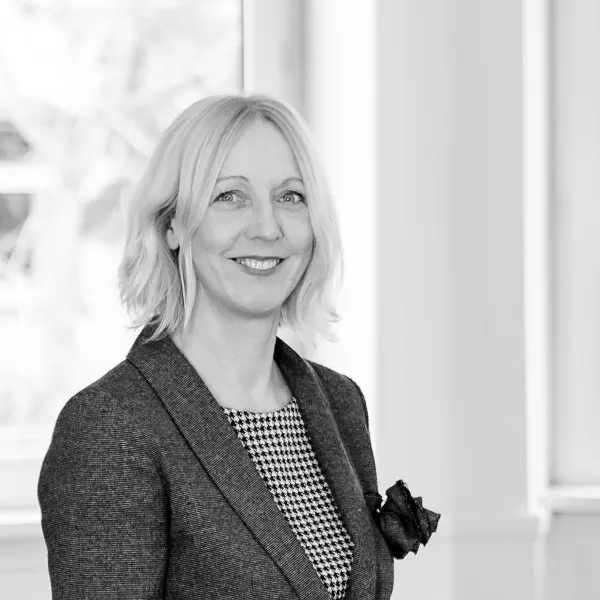
Our team is our asset. We do not claim having all expertise in all segments. Whenever we have the feeling that someone else would be a better fit, we pro actively initiate the introduction.


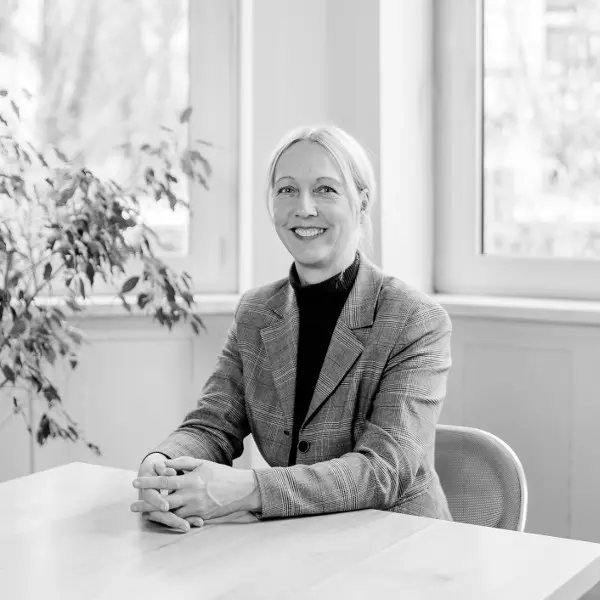
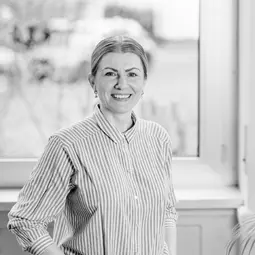
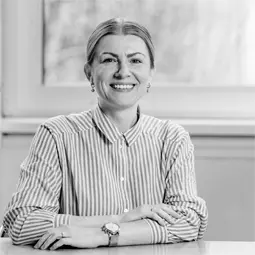
We appreciate personal contact. Please do not hesitate to get in contact by phone or e-mail.
Phone: +49 (0)69 69 59 60-0
Telefax: +49 (0)69 69 59 60-22
e-mail: info@kollner.eu
You will find us in the Vogelweidstrasse 8 in 60596 Frankfurt am Main